Sometime late July, I met some friends for a free concert in Byrant Park. Performing was Cécile McLorin Salvant, who I had never heard of before but was a real favorite of the friend who invited me. We arrived early enough to secure a picnicking spot in the upmost front row, if a bit far stage left, but still with a clear view of all that was about to happen. Shortly after seven that evening, Salvant walked on stage with her band comprising of a pianist, a bassist, and a drummer.
It must first be said that Salvant is an unbelievable talent. Before any note was sung or piano key struck, her buggy sunglasses and reflective chrome outfit made the stage feel like an afrofuturist runaway. And then she sang. The critics—if there are any—can tell you the rest.
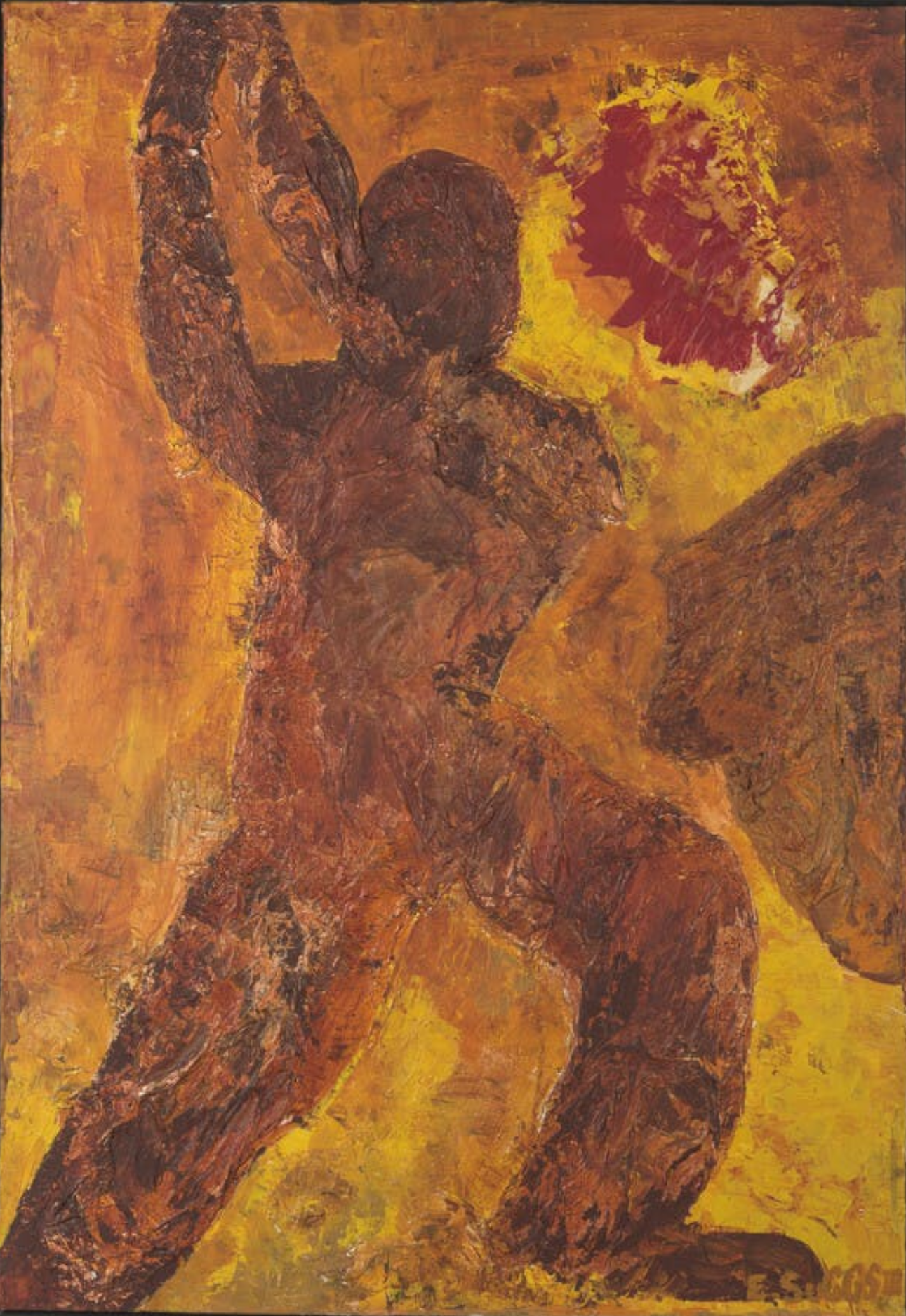
Towards the end of her set, she performed her song "John Henry". She began without any accompaniment, her voice ludic and crystal. She told the story of the eponymous man, the lyrics feeling almost repetitive in their nature. Each stanza started with an exuberant call-out of John Henry's name, as if beckoning him rather than regaling us with the story of his life and death. And as she told this story, with each detail and repeat of the name, the nostalgia swelled up in me. It was him, the John Henry, the mythic Black steel driver. I could have sworn the last time I heard that name was in elementary school, as part of a lesson or in a children's book. I closed my eyes, simultaneously in remembrance and simply trying to recall more.
Soon after, the drummer entered with such a rhythmic beat that it provoked whoops from the crowd and almost made me get on my feet. Salvant's singing felt ironic, impossibly happy in tone while speaking—no, singing!—about a man who had died laboring. But the drums did something. Suddenly, the song felt wholly, earnestly celebratory. With my eyes still closed, I started swaying with the beat. I was being taken somewhere, spiritually.
And so in that moment, sitting there, swinging my seated body and lobbing my head side to side, I started to cry—not audibly, but if someone were to look at my face in that moment they would have seen an almost grieving one, streaked in a modest number of tears.
Quite immediately, I began to understand why. Here I was, hearing the name John Henry for what felt like the first time since my childhood. Back then, I have to admit, I didn't think much of it, as I didn't think much of folk tales in general. But now hearing his story, decades later—after I have grown so much in so many ways, not least politically—its always obvious meaning was not only merely being understood but occupied all my senses. He was and forever will be a symbol of Black labor, labor that built this country, more than any machine or invention. And just how I had forgotten John Henry, America continues to forget what Black labor has achieved. Given my placement in that analogy, I felt guilty for being a participant in that forgetfulness, but saved in a however small way by the sonorous confluence of rhythm, melody, and lyric. The song's transition from eulogizing to celebratory, my mind's shift from ignorance to remembrance, even my body subtly going from sitting to swaying—the way they all coincided was an overwhelming feeling. It felt good, this quiet catharsis of mine.
After having my private moment, I opened my eyes and just looked at all the people with us in the park. It was a very diverse crowd, and it took on a new significance in the moment. I had the thought, "This is his doing as well." Which is to say, most of what I consider redeemable about America, I attribute to Black labor. If not for the Black Freedom Movement of the 1950s and '60s, the present scene would not be, simply because many of the people in the audience would not be here. That struggle involved both the mobilizing and withholding of labor, and among its successes was the opening of America's door for the world to enter. And so the peoples' inheritance are themselves, rooted in this history.
There's something poetically circular about Salvant's performance, invoking memory in a way that made the performance itself one of the most memorable I've seen. She sent me back, and consequently, thankfully, I will not forget moving forward.